Search News
Industry Portal
Hot Articles
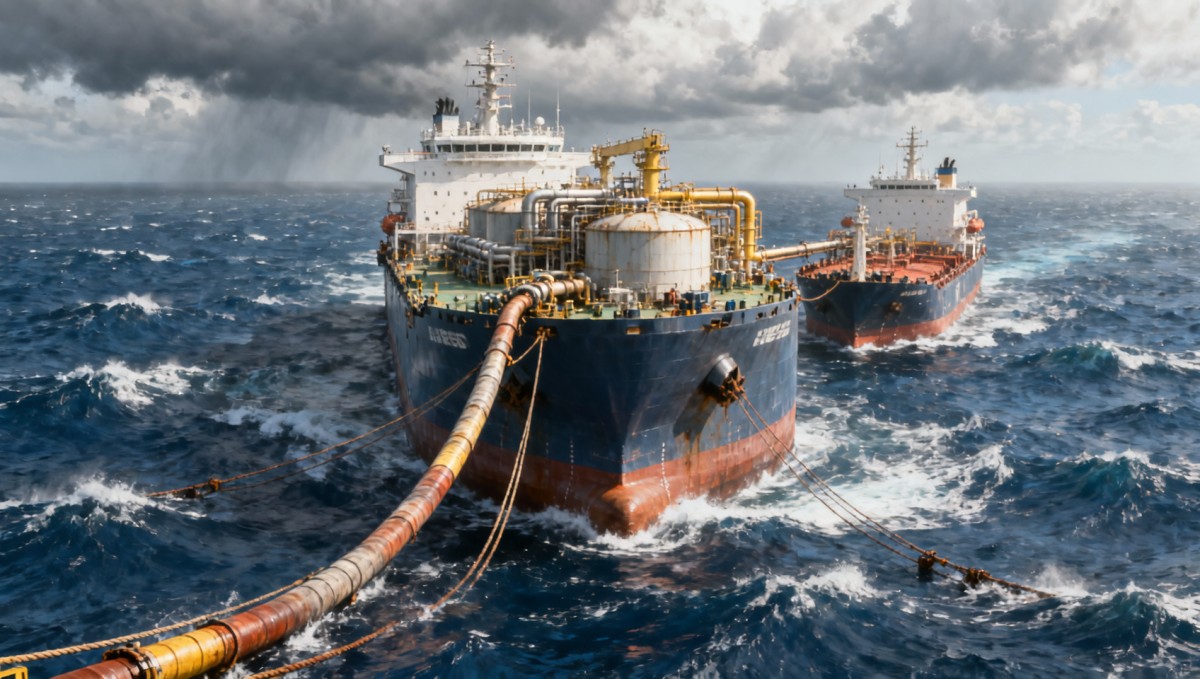
- How South Korea and China differ in shipbuilding intelligenceShipbuilding intelligence South Korea vs. China: compare engineering depth, smart-yard scale, green propulsion, supply chains, and delivery risk for smarter maritime investment decisions.
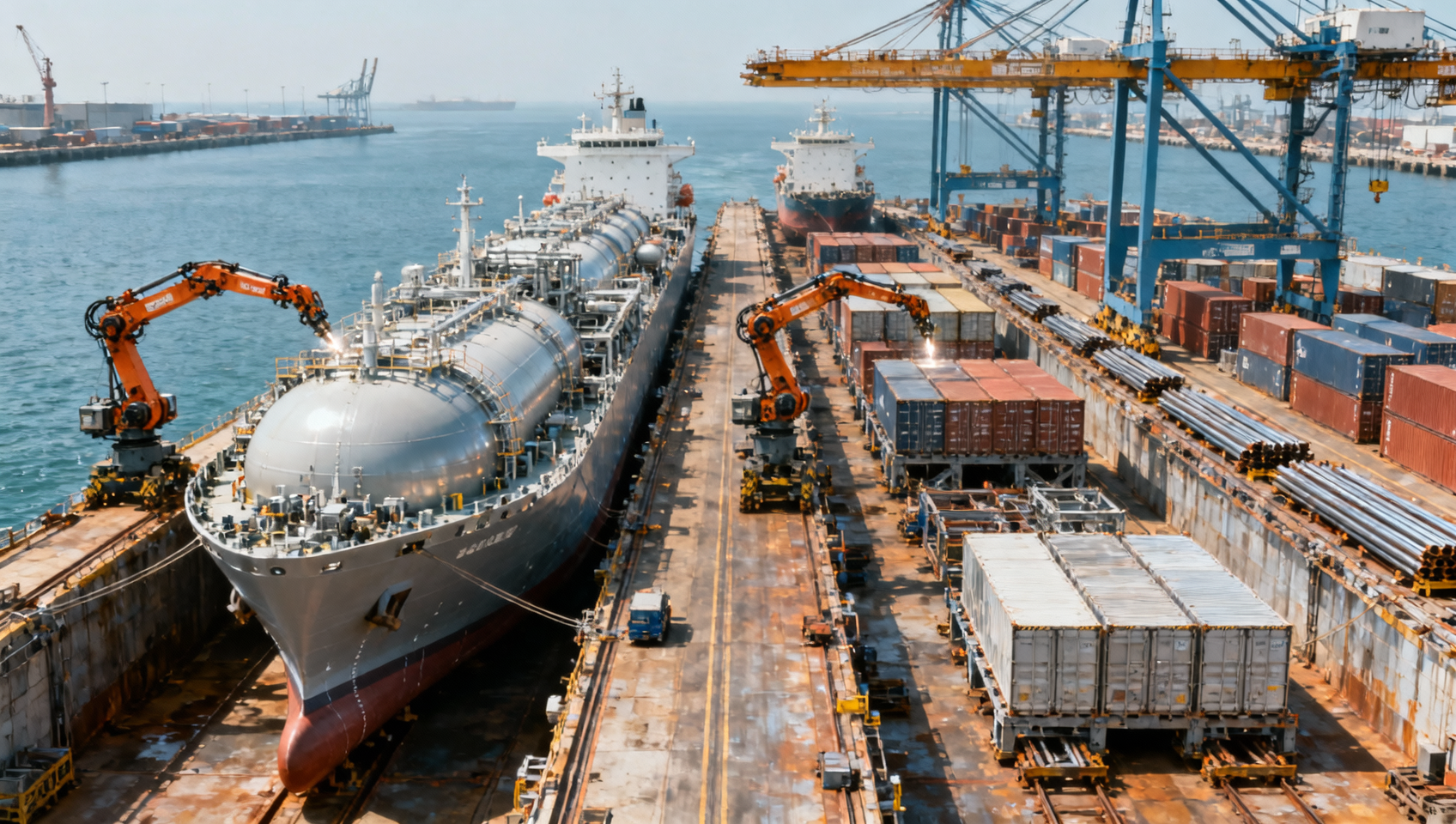
- Where does intelligence deliver value in the shipbuilding supply chain?Shipbuilding intelligence supply chain insights reveal how to reduce design risk, strengthen sourcing, meet compliance demands, and improve lifecycle value.
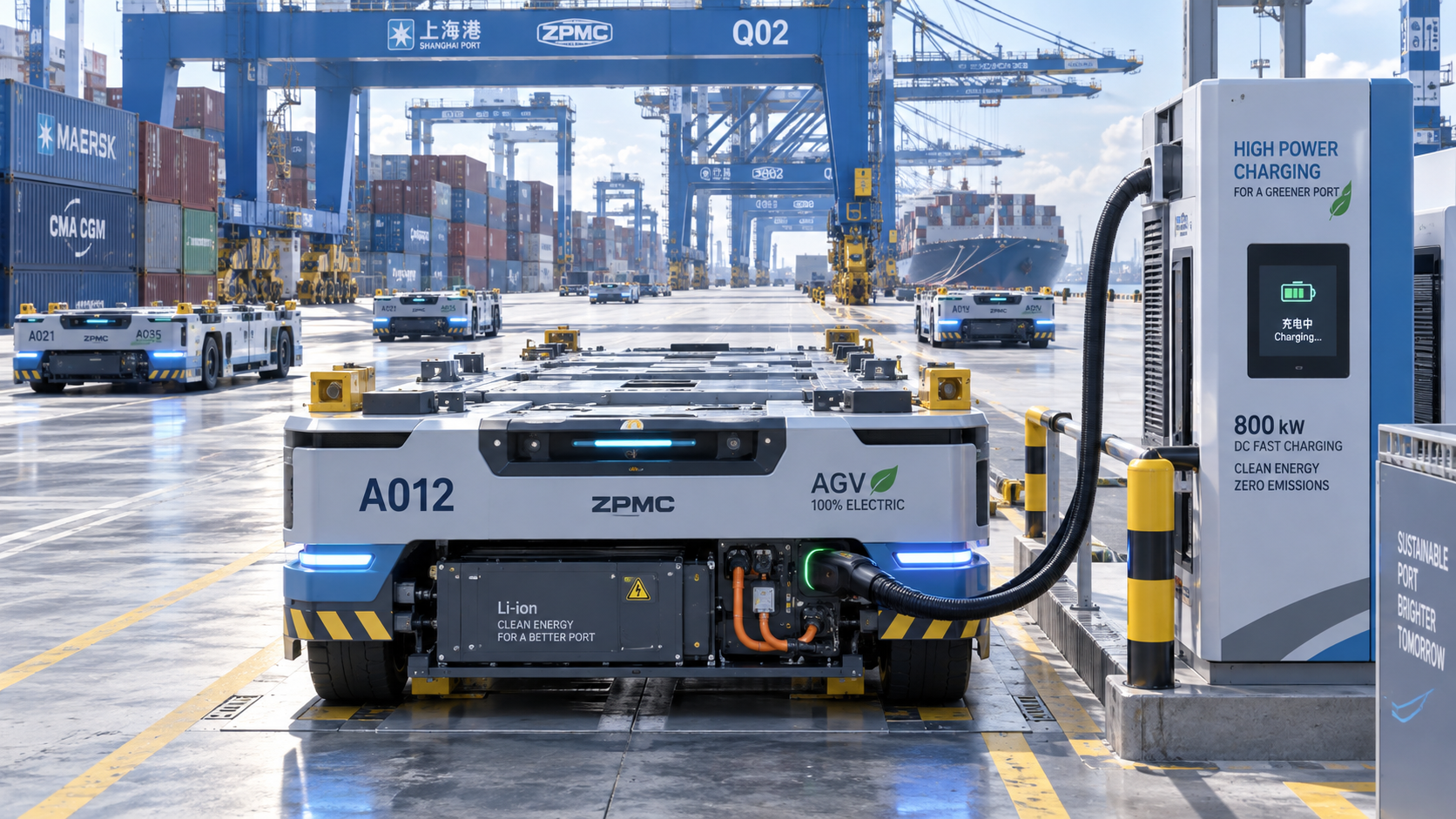
- How container AGV battery charging affects fleet availabilityContainer AGV battery charging directly shapes fleet availability. Learn how smart charging, battery health, reliable connectors, and data-led maintenance reduce downtime.
Popular Tags
Industry NewsWhat drives downtime during FPSO vessel offloading?
Author
Offshore Structural ExpertTime
Sep 27, 2026Click Count
What Drives Downtime During FPSO Vessel Offloading?
Downtime during FPSO vessel offloading usually results from several linked constraints, not one isolated failure. Weather, station-keeping, transfer equipment, tanker readiness, and decisions all matter.
For operators, the practical question is not simply why offloading stops. It is which constraint is limiting the operation now, and what can prevent recurrence.
An FPSO vessel depends on reliable cargo export to protect production continuity. When storage approaches operating limits, a delayed lifting can force production curtailment and increase risk.
The highest-value operational focus is therefore early constraint detection. Teams need clear limits, accurate forecasts, disciplined inspections, and shared decisions between FPSO and shuttle tanker personnel.
This guide explains the main drivers of FPSO vessel offloading downtime, how they interact, and which control measures help offshore teams improve transfer reliability safely.
Start With the Actual Constraint, Not the Visible Delay

Operators often describe an interrupted lifting as “weather downtime,” although the immediate cause may be a drifting tanker, a damaged hawser, a slow valve response, or unclear authority.
A useful review separates downtime into four categories: environmental limits, tanker availability, connection and transfer equipment performance, and operational or procedural readiness.
This classification matters because each category has different leading indicators. Weather may require forecast-based planning, while hose problems require inspection, maintenance, and spare-part readiness.
Records should capture the first limiting condition, subsequent contributing conditions, time lost, corrective action, and whether the same event has occurred during previous liftings.
Without this level of detail, recurring issues become hidden inside generic downtime codes. That makes reliability analysis weak and can lead to ineffective investment decisions.
For an FPSO vessel, offloading reliability is a production issue, a marine assurance issue, and a safety issue. It should be managed with the same discipline.
Weather and Sea State Often Set the Operating Window
Wind, waves, swell direction, current, visibility, lightning, and tropical systems can all restrict an FPSO vessel offloading operation before cargo transfer begins.
Sea state is particularly important because wave height alone does not explain vessel behavior. Wave period, heading, crossing seas, and local current can worsen relative motion.
Long-period swell may create significant surge and yaw even when local wind conditions appear manageable. This can make approach, connection, or hose handling unsafe.
Operators need limits that reflect the full transfer system, rather than a single generic weather threshold. The relevant limit may differ for approach, tandem position, connection, and disconnection.
Visibility can create downtime independently of wave conditions. Poor visibility affects navigation confidence, lookout effectiveness, radar interpretation, communications, and the ability to verify exclusion zones.
Lightning risk may require suspension of exposed deck work. A transfer can be technically stable but still unavailable because personnel cannot safely handle connection equipment.
Forecast quality affects how much of this downtime is avoidable. Short-term forecasts should be compared with measured conditions and vessel-specific response experience after every significant event.
A conservative forecast trigger can protect people and equipment, but unnecessarily wide buffers may reduce lifting opportunities. Operators should periodically validate triggers against actual conditions.
Weather planning works best when the FPSO, shuttle tanker, marine coordinator, and onshore support team use the same forecast source, timing, and escalation criteria.
Mooring, Positioning, and Relative Motion Can Stop a Safe Transfer
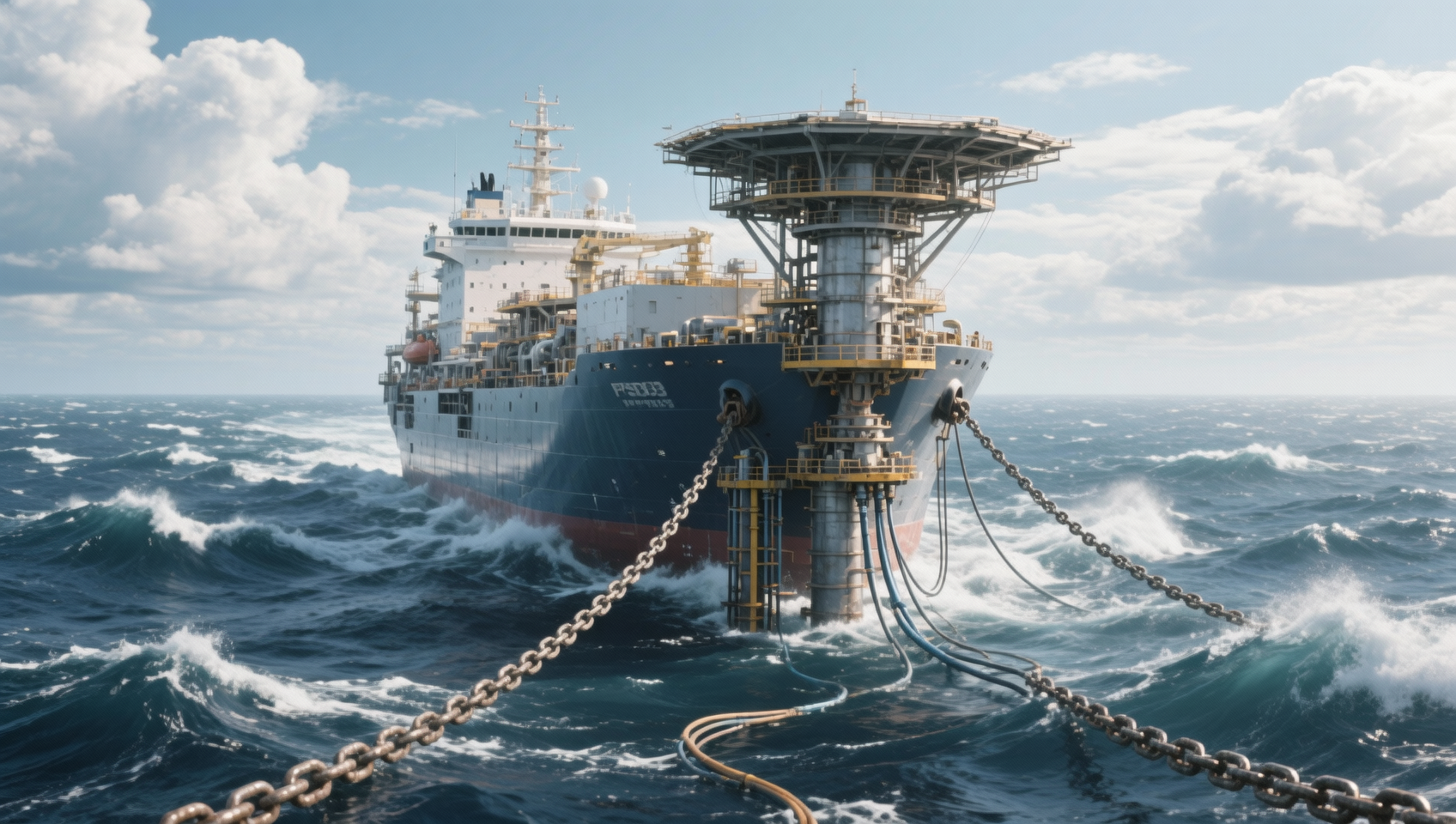
During tandem offloading, the shuttle tanker must maintain a controlled position relative to the FPSO vessel. Excessive surge, sway, yaw, or heading deviation can require suspension.
Dynamic positioning performance is affected by thruster availability, power generation margins, sensor reliability, control-system alarms, current, wind, and the vessel’s loading condition.
A single degraded thruster may not immediately stop operations, but it can reduce redundancy and narrow the environmental window. This should be recognized before approach.
Where conventional tanker positioning methods are used, propulsion response, steering performance, tug support, and communication discipline become equally important for maintaining safe separation.
Heading control is not merely a navigational concern. It affects hawser load, hose geometry, manifold alignment, deck access, and the predictability of emergency disconnection.
Mooring loads can rise quickly when vessel motions become coupled with changing current or swell. Load trends are more useful than isolated readings during a developing event.
Operators should investigate repeated high-load alarms even when no shutdown occurs. These events may reveal a deteriorating environmental limit, equipment issue, or handling practice.
Approach planning must also account for vessel drafts, trim, propulsion limitations, exclusion zones, subsea infrastructure, and available escape routes in case conditions deteriorate rapidly.
A clear abort philosophy prevents hesitation. Every involved team should understand who can call an abort, what triggers it, and how the disconnection sequence is managed.
Hawser, Hose, and Connection Equipment Failures Create Disproportionate Delays
Transfer hardware problems are among the most preventable sources of FPSO offloading downtime. They can also become high-consequence events if damage is missed or normalized.
Offloading hoses experience cyclic loading, bending, pressure variation, abrasion, handling stress, and environmental exposure. Their condition cannot be judged only by visual appearance.
Inspection programs should follow the hose manufacturer’s requirements, class guidance, operating history, and actual duty cycle. Critical findings need defined acceptance and rejection criteria.
Hose handling incidents often begin with poor geometry or uncontrolled movement. Incorrect support, contact with structures, sharp bending, and excessive tension can shorten service life.
Hawser integrity is similarly dependent on inspection quality, retirement criteria, load history, connector condition, and the way crews manage chafing during repeated operations.
Equipment readiness includes more than the primary hose and hawser. Messenger lines, pick-up ropes, chafing chains, winches, hydraulic systems, fenders, and communication equipment matter.
A minor winch fault can delay the entire lifting because personnel cannot safely recover, deploy, or control the connection system. Redundancy should match criticality.
Valve failures are another recurring source of avoidable delay. Sticking valves, slow actuators, faulty limit switches, and hydraulic leaks can interrupt transfer or complicate emergency response.
Preventive maintenance should be scheduled around actual lifting demand. Deferring critical maintenance until a planned shutdown may create greater production exposure during an active export campaign.
Spare-parts strategy is essential offshore. Teams should identify long-lead components that can hold an FPSO vessel offline and maintain realistic contingency stock or rapid-access arrangements.
Cargo Transfer Bottlenecks Are Not Always Marine Problems
Once the shuttle tanker is connected, offloading can still be delayed by process limitations. Cargo pumps, inert gas systems, tank levels, valves, meters, and control systems require attention.
Low pump performance can extend transfer duration beyond the expected weather window. This creates a compounding risk when conditions are forecast to deteriorate later.
Tank-management errors can also constrain export. Poor sequencing, insufficient ullage, unstable tank levels, or inadequate settling time can delay cargo availability and create operational complexity.
Crude properties may affect pumping and transfer performance. Viscosity, temperature, wax content, water cut, sediment, emulsions, and gas behavior should be considered in operating plans.
Metering disputes or unreliable measurement data can halt completion activities. Both vessels need agreed procedures for gauging, sampling, reconciliation, and handling of discrepancies.
Inert gas and vapor management are equally important. Pressure-control issues, alarm trips, or incompatible operating practices may restrict transfer even when pumps and weather are acceptable.
Control-room teams should monitor transfer trends rather than wait for alarms. Changes in pressure, pump current, flow rate, tank level, or temperature may reveal a developing problem.
Well-designed contingency procedures reduce recovery time. They should address controlled rate reduction, temporary suspension, restart conditions, safe isolation, and communication with the receiving tanker.
Shuttle Tanker Readiness and Scheduling Can Be the Real Cause
An FPSO vessel cannot offload without a suitable receiving tanker arriving within the required window. Commercial scheduling and marine readiness directly affect production flexibility.
Tanker delays may arise from port congestion, weather en route, crew changes, bunkering, inspections, cargo discharge delays, mechanical defects, or competing charter commitments.
Compatibility must be confirmed before arrival. Manifold arrangement, hose interface, mooring configuration, DP capability, cargo capacity, communications, and certification status can all matter.
Last-minute compatibility checks consume valuable time offshore. A standardized pre-arrival assurance process should identify gaps early enough for correction or replacement tanker planning.
Tank cleaning, ballast condition, cargo-tank readiness, and inert gas status can delay a receiving vessel even after it reaches the field. Arrival does not guarantee readiness.
Operators should distinguish between tanker arrival time and “ready to commence offloading” time. The difference often reveals planning gaps that are invisible in schedule reports.
Production teams need an agreed storage-margin trigger for escalating tanker delay risk. Waiting until FPSO tanks are nearly full reduces options and increases pressure on offshore crews.
Contingency tanker arrangements are expensive, but their value should be assessed against production deferral exposure, contract penalties, demurrage risk, and safety implications of rushed operations.
Human Factors and Communication Failures Extend Every Interruption
Many offloading delays become longer than necessary because teams lack shared situational awareness. The FPSO, tanker bridge, cargo control rooms, and deck crews must coordinate continuously.
Critical instructions should be closed-loop communications. The receiver repeats the instruction, confirms understanding, and reports completion before the next transfer stage proceeds.
Language differences, radio interference, fatigue, and unfamiliar personnel can weaken communication quality. These factors deserve active controls, not assumptions about crew competence.
Pre-transfer meetings should cover weather trends, operating limits, emergency roles, transfer rate, stop-work authority, communication channels, and the conditions requiring reassessment.
Checklists remain valuable when they support thinking rather than replace it. Teams should use them to verify readiness, then discuss the operational risks specific to that lifting.
Shift handovers need particular care. A change in personnel during approach, connection, transfer, or disconnection can create information loss unless active conditions are documented clearly.
Fatigue management matters during extended weather waits and overnight operations. A crew that has spent hours monitoring conditions may be less prepared for a narrow safe opportunity.
Post-event debriefs should be practical and blame-free. The objective is to preserve operational learning, identify system weaknesses, and improve the next offloading campaign.
Use Data to Reduce Repeat FPSO Vessel Offloading Downtime
Reliable improvement starts with consistent data. Every delayed or aborted lifting should have a coded cause, duration, environmental context, equipment status, and operational consequence.
Downtime codes must be specific enough to support action. “Marine delay” is rarely useful when the underlying issue was swell direction, tanker propulsion, or hawser handling.
Trend analysis should identify the most frequent causes, the longest-duration causes, and the events with the greatest production impact. These are not always the same.
Operators should also measure near misses and degraded conditions. Repeated high hawser loads, unstable positioning, or valve response delays can predict a future stoppage.
Condition monitoring can improve decision-making for critical equipment. Pressure trends, vibration data, hydraulic performance, pump efficiency, and power-system health can reveal deterioration earlier.
Digital systems are useful only when they support a clear operating decision. Dashboards should highlight limits, trends, alarms, and required actions instead of creating more data burden.
Weather and motion data should be linked to actual transfer outcomes. Over time, this allows operators to refine field-specific criteria without compromising conservative safety margins.
Performance reviews should include offshore crews, maintenance, marine assurance, production, logistics, and commercial teams. Offloading downtime crosses organizational boundaries and requires shared ownership.
Practical Priorities Before the Next Lifting
Before the next offloading operation, confirm storage margin, receiving tanker readiness, forecast confidence, transfer equipment condition, and the operational limits expected for the field.
Verify that all parties understand the current weather window and the latest time at which approach, connection, rate reduction, or disconnection must be considered.
Review open defects affecting DP, propulsion, power generation, cargo pumps, valves, winches, hoses, or communications. Temporary workarounds should be formally assessed and communicated.
Confirm emergency disconnection readiness through equipment checks and role clarity. The safest operation is one in which crews can stop and separate without confusion.
Use a short operational risk review when conditions differ from normal. This is particularly important after equipment maintenance, crew changes, forecast uncertainty, or revised tanker schedules.
After completion, capture facts while they remain fresh. Record delays, difficult conditions, abnormal trends, near misses, and actions that improved or restricted transfer performance.
Conclusion: Reliable Offloading Depends on Managing the Whole System
Downtime during FPSO vessel offloading is rarely solved by improving one component alone. Reliable performance depends on coordinated control of weather, positioning, equipment, process, tanker, and people.
Operators gain the most value by identifying the first limiting condition, recording contributing factors, and acting on repeat patterns before they become production-threatening interruptions.
The strongest FPSO vessel offloading programs combine conservative operating limits with accurate data, maintained transfer equipment, realistic tanker planning, and clear authority to pause unsafe work.
When these controls are managed as one operating system, teams can reduce avoidable delays, protect cargo export continuity, and make each offshore lifting safer and more predictable.
Recommended News
- Oct 03, 2026How South Korea and China differ in shipbuilding intelligenceShipbuilding intelligence South Korea vs. China: compare engineering depth, smart-yard scale, green propulsion, supply chains, and delivery risk for smarter maritime investment decisions.Author :

- Oct 02, 2026Where does intelligence deliver value in the shipbuilding supply chain?Shipbuilding intelligence supply chain insights reveal how to reduce design risk, strengthen sourcing, meet compliance demands, and improve lifecycle value.Author :

- Oct 01, 2026How container AGV battery charging affects fleet availabilityContainer AGV battery charging directly shapes fleet availability. Learn how smart charging, battery health, reliable connectors, and data-led maintenance reduce downtime.Author :

- Sep 30, 2026What is shaping the terminal automation market outlook?Terminal automation market outlook: discover how throughput, labor, electrification, software integration, and retrofit strategies are driving smarter, more resilient port operations.Author :

- Sep 29, 2026How to prevent traffic conflicts in an AGV terminalAGV terminal traffic conflict prevention: discover zone reservations, crane coordination, queue control, and recovery practices for safer, smoother operations.Author :

- Sep 28, 2026How FPSO platform topside weight affects conversion feasibilityExplore how FPSO platform topside weight influences conversion feasibility, hull strength, stability, mooring, lifting, and lifecycle cost decisions.Author :

- Sep 27, 2026What drives downtime during FPSO vessel offloading?Discover what drives FPSO vessel offloading downtime—from weather and tanker readiness to equipment failures—and explore practical controls to improve safety and export reliability.Author :

- Sep 26, 2026When does an FPSO ship need a turret mooring system?FPSO ships need turret mooring systems when weathervaning, complex risers, harsh metocean conditions, or safe offloading demand stronger lifecycle operability.Author :

- Sep 25, 2026How to compare rig newbuild drilling equipment package bidsCompare rig newbuild drilling equipment package bids with confidence—evaluate scope, compliance, delivery, lifecycle cost, and support to reduce offshore project risk.Author :

- Sep 24, 2026What belongs in a rig newbuild drilling equipment package?Rig newbuild drilling equipment package essentials: explore hoisting, mud systems, BOP safety, controls, interfaces, and documentation for offshore readiness.Author :

- Sep 02, 2026What Buyers Should Verify Before Sourcing Monel Alloy Steel PlateMonel Alloy Steel Plate buyers should verify grade, standards, chemistry, traceability, and plate condition before ordering to avoid costly failures and source with confidence.Author :

- Aug 27, 2026Gas Turbine Output and Heat Rate: Which Specs Matter in Power ProjectsGas Turbine output vs heat rate: learn which specs truly drive power project value, fuel cost, and site performance so you can compare turbine offers with confidence.Author :